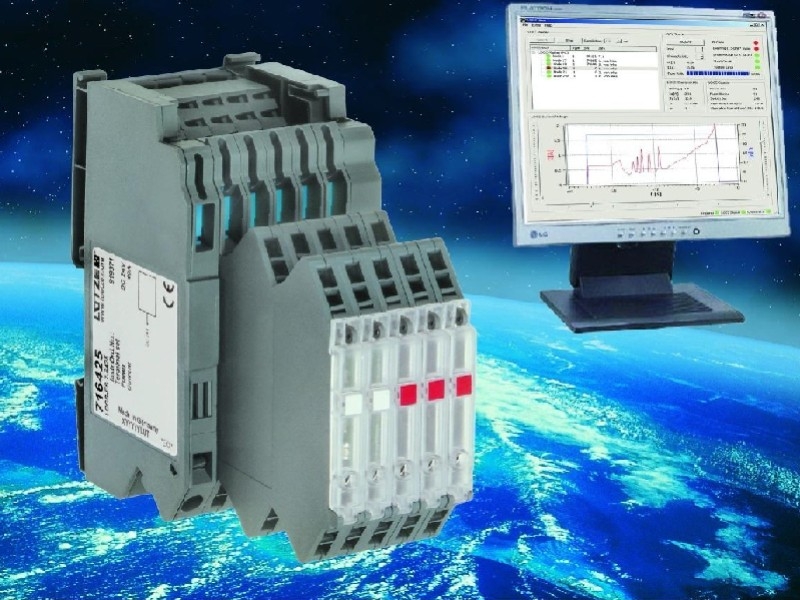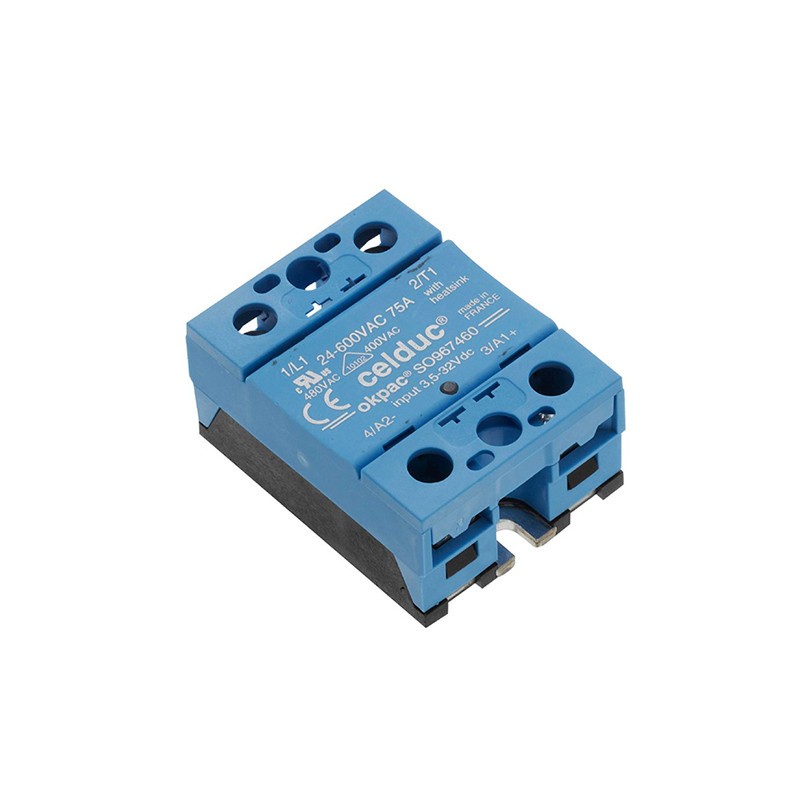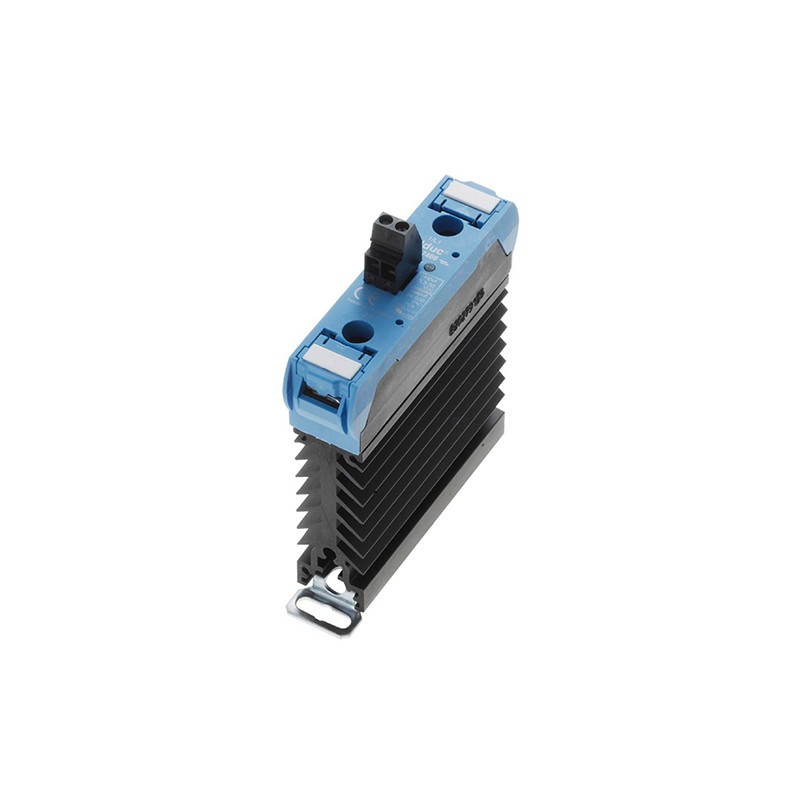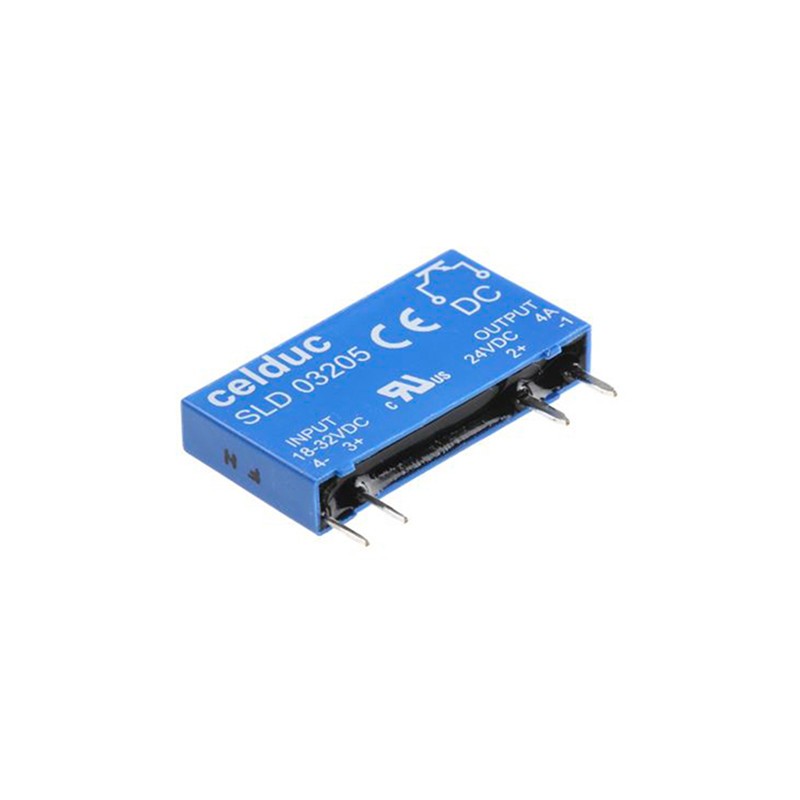












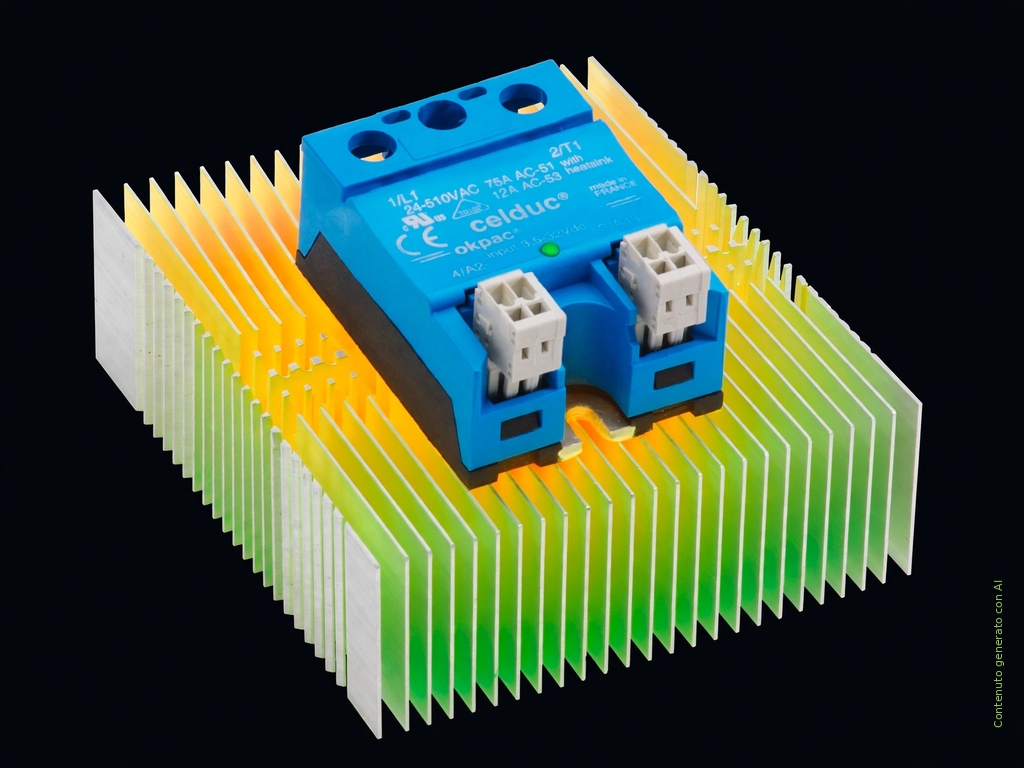
An SSR dissipates roughly 1–1.5 W per ampere switched. Start from the real worst-case cabinet temperature, read the manufacturer's derating curve and check the required thermal resistance.
Why SSRs suffer in heat. The semiconductor has a fixed on-state voltage drop, so heat grows with current while ambient temperature eats the margin to junction limit.
Four-step sizing. Worst-case cabinet temperature → power loss (load current × on-state drop) → maximum heatsink thermal resistance (formula above) → pick a lower value and leave clearance for convection.
Zero crossing vs random fire. Zero crossing for resistive heaters and lower EMI; random fire for inductive loads and phase control.
Common mistakes. No thermal paste, SSRs packed side by side, non-ultrafast fuse, no surge protection on inductive loads.
• How hot does a 25 A SSR get?
About 25–35 W at full load.
• Can I mount it straight on the back plate?
Only if the maker allows it; usually a dedicated heatsink is needed.
• Which fuse protects an SSR?
An ultrafast fuse with I²t below the relay's rating.
• SSR or contactor for frequently switched heaters?
The SSR, with no moving parts and millions of cycles.